
British Home Kitchen — Seasonal Guide
Seasonal Cooking Guide for the British Isles
Cooking in harmony with the seasons is the most effective way to experience the full potential of British produce. By selecting ingredients at their natural peak, you ensure better flavour, higher nutritional value, and a closer connection to the local landscape. This guide outlines the British culinary calendar — the best ingredients available during each season and how to incorporate them into your home cooking routine.
Chapter One — March to May
Spring: The Return of Greenery
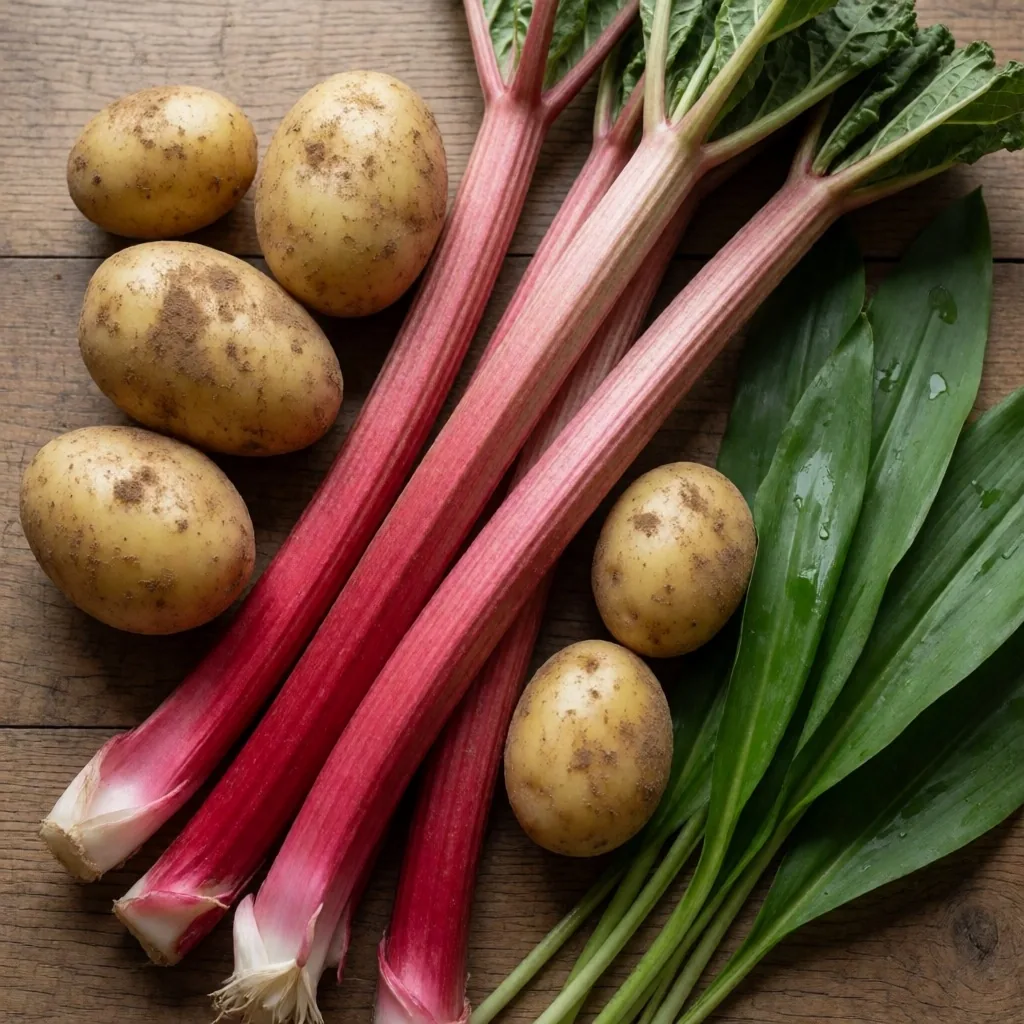
Spring in Britain is marked by the arrival of tender, vibrant vegetables after the long winter months. Wild garlic begins to appear in woodlands from late March, carpeting the forest floor with broad, fragrant leaves that lend a mellow garlic note to soups, pestos, and compound butters. The first stalks of forced rhubarb — grown in dark forcing sheds in the Yorkshire Triangle — bring a sharp, bright flavour and a vivid pink colour to the kitchen long before the outdoor crop is ready.
Spring lamb is the cornerstone of the season's table. Born in the winter and turned onto fresh grass as the weather warms, it carries a delicate sweetness that older lamb lacks. Roasted simply with rosemary and garlic, or slow-cooked with the first of the new season's mint, it needs little embellishment. Equally anticipated are Jersey Royal potatoes — grown only on the island of Jersey, their thin skins and waxy texture require little more than butter and a scattering of mint to be enjoyed at their best.
What to look for
- —Wild garlic, forced rhubarb, spring lamb, Jersey Royals, asparagus, sorrel, sea kale
- —Asparagus is a fleeting crop — the British season runs roughly from late April to late June
- —Forced rhubarb is tender and needs less sugar than the maincrop outdoor variety
Chapter Two — June to August
Summer: A Wealth of Berries and Salads
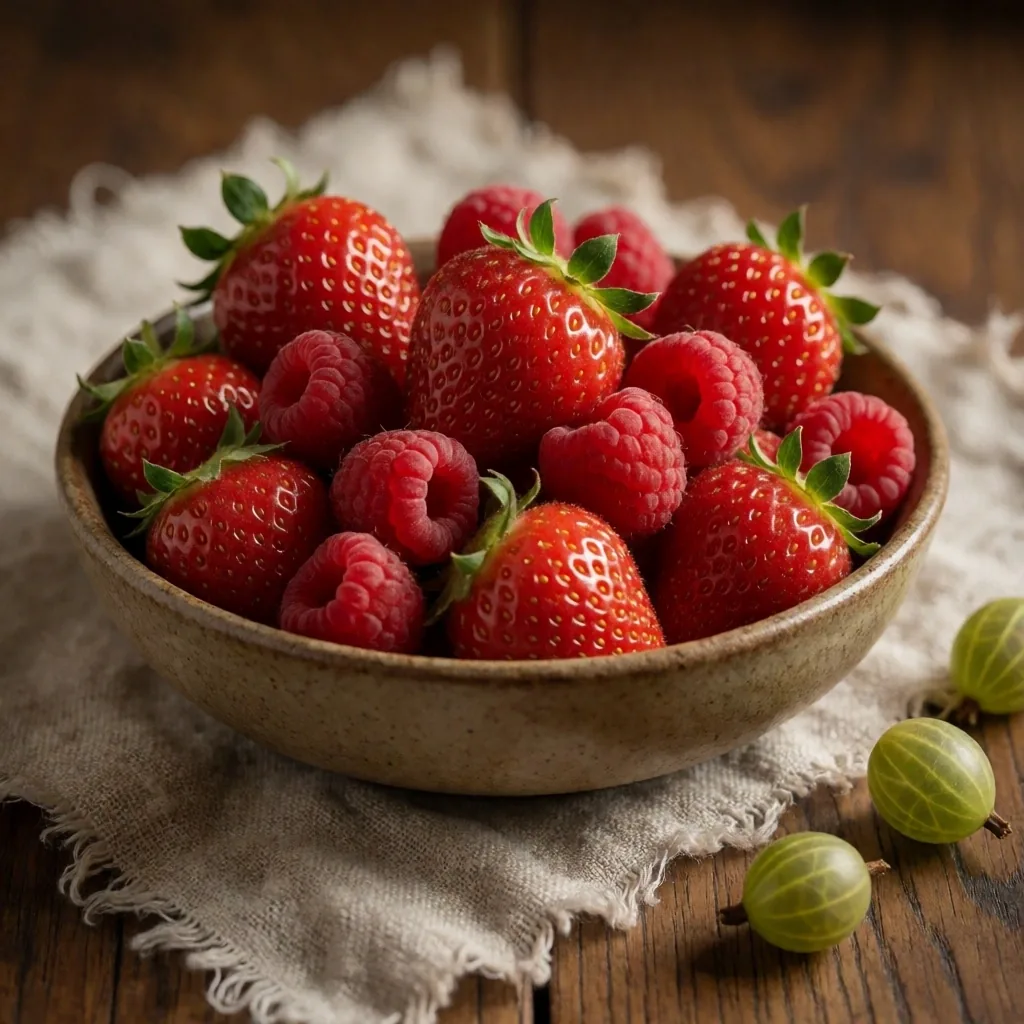
As the days lengthen, the British garden overflows with soft fruits. Strawberries arrive first, followed closely by raspberries, gooseberries, and redcurrants. These are the fruits of trifles, fools, and simple bowls served with cream — they are best eaten the day they are picked, when their flavour is at its most intense. Gooseberries, sharp and underused, make fine compotes and crumbles, or can be stewed into a sharp sauce for mackerel.
This is the peak season for outdoor dining and light, fresh meals that require minimal cooking. Crisp lettuces, sweet peas, broad beans, and the first courgettes fill the vegetable plot. A summer tart made with a shortcrust shell, fresh peas, broad beans, and a soft cheese filling captures the season in a single slice. The goal is to let each ingredient speak for itself — a plate of sliced tomatoes with salt, olive oil, and torn basil is as fine a summer dish as any.
Simple Summer Notes
- —Peas and broad beans are best eaten within hours of picking — sugars convert to starch quickly
- —Gooseberries need topping and tailing before cooking — snip both ends with kitchen scissors
- —A pinch of sugar on tomatoes before serving draws out their juice and rounds the acidity
Chapter Three — September to November
Autumn: The Harvest and Foraging
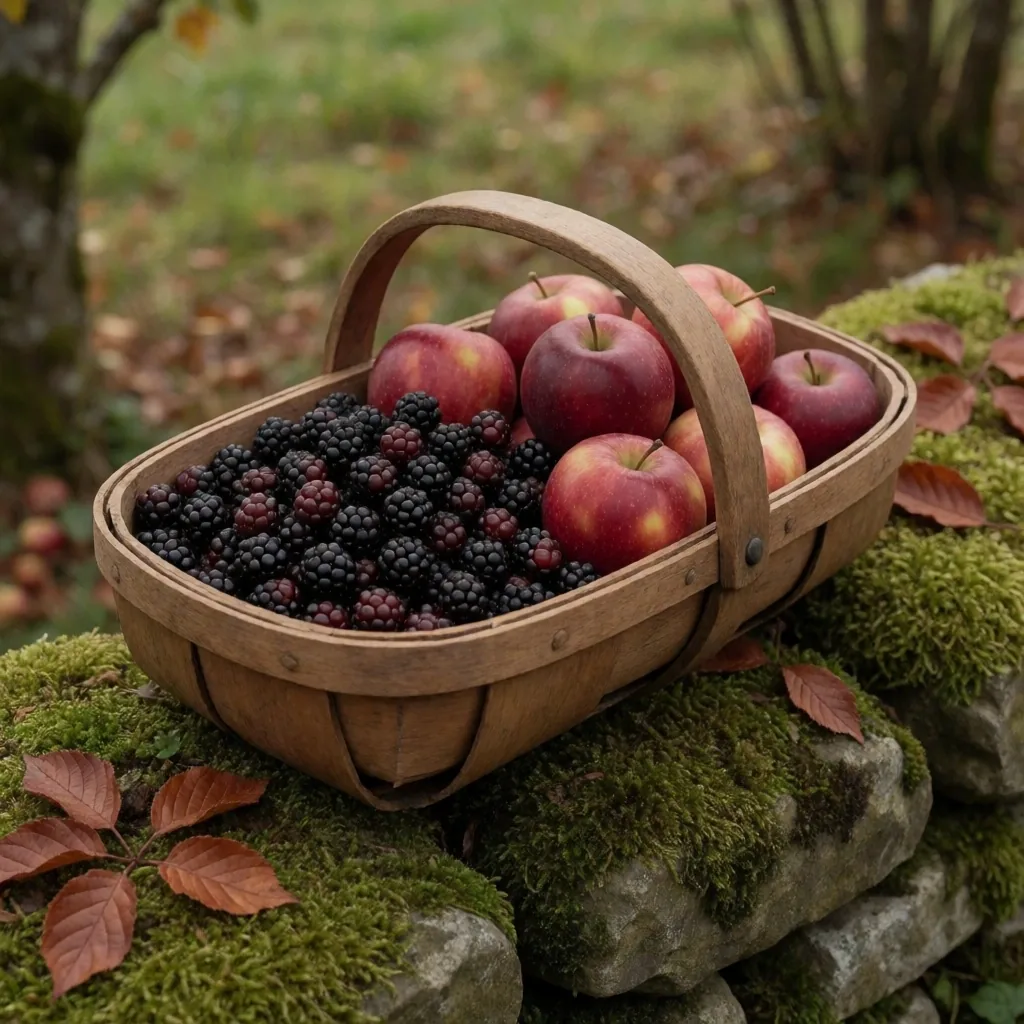
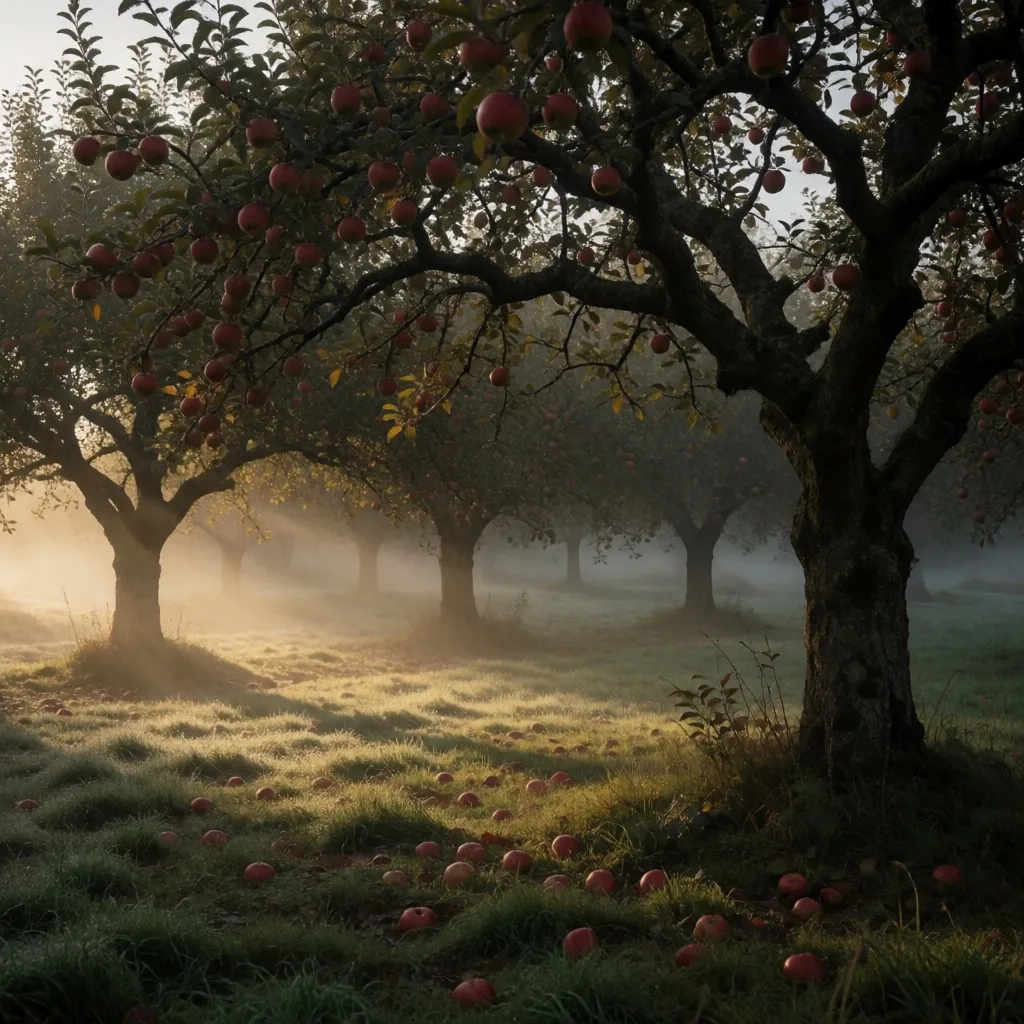
Autumn is the most abundant time for the British cook, defined by the harvest of orchard fruits and the arrival of wild mushrooms. Apples and pears take centre stage in crumbles and pies — a Bramley apple dumpling or a baked pear with honey and oatmeal are dishes that belong to this season alone. Root vegetables like carrots and parsnips begin to sweeten in the cooling soil, as the first frosts convert their starches to sugar.
The tradition of blackberry picking runs deep in the British autumn. Hedgerows across the country bristle with fruit from late August through September, and a brambling walk followed by a crumble is a ritual passed down through generations. The start of the game season brings richer, deeper flavours to the table — pheasant, partridge, and venison carry the earthy, herbaceous notes of the moorland and forest.
Wild mushrooms — chanterelles, porcini, and the occasional field mushroom — appear in woodlands from late summer onwards. If foraging for fungi, never pick a species you cannot identify with absolute certainty. Field guides and local experts are the safest teachers; a single misidentified mushroom can cause serious harm.
Chapter Four — December to February
Winter: Comfort and Preservation
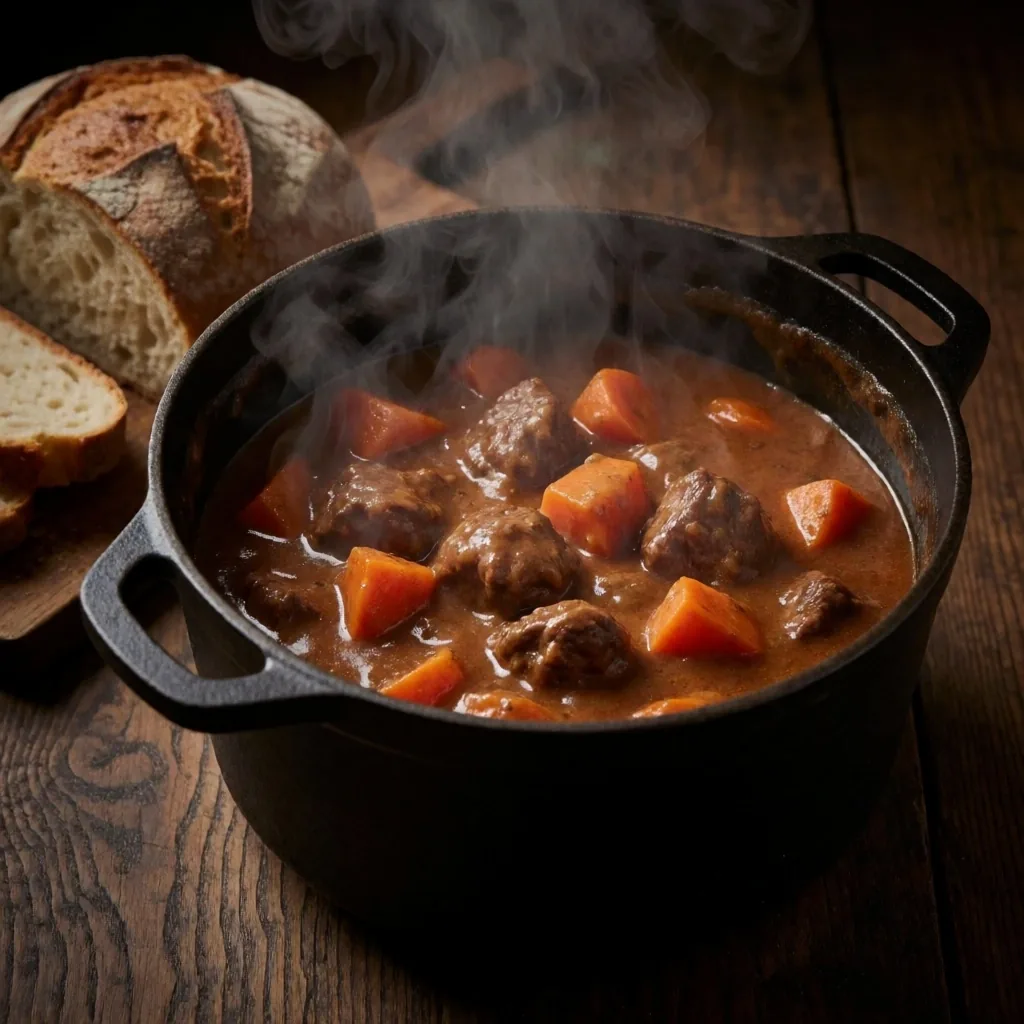
When the frost sets in, the British kitchen turns toward hearty, warming dishes that utilise stored crops and preserved goods. Cabbages, leeks, and kale provide essential greens through the coldest months — cavolo nero and curly kale stand up well to slow cooking and pair naturally with butter beans and barley in thick winter soups.
The pantry's supply of jams and pickles adds interest to winter meals. A jar of last summer's piccalilli cuts through the richness of cold cuts and cheese; chutneys made from windfall apples and green tomatoes bring acidity and warmth to a winter ploughman's. These preserves are not merely accompaniments — they are a record of the year's harvest, each jar a small connection to a season now past.
Slow-cooked stews and steamed puddings provide the necessary warmth and sustenance during the darkest months. A steak and kidney pudding steamed for four hours in a suet crust, or a Lancashire hotpot cooked low and slow under a lid of sliced potatoes, are dishes designed to fuel a body working against the cold. Root vegetables — swede, turnip, parsnip, and carrot — form the base of most winter cooking, their sweetness deepening with long, gentle heat.
Root Cellar
Swede, parsnips, carrots, and celeriac store well in a cool, dark place. Keep them in paper or hessian sacks — plastic traps moisture and speeds decay.
Hardy Greens
Kale, leeks, and Brussels sprouts survive frosts and often taste sweeter after a cold snap. Strip kale leaves from tough central stems before cooking.
The Preserved Pantry
Jams, chutneys, and pickles made in summer and autumn earn their place now. Check seals before opening; discard any jar with a bulging lid or mould.
Local Sourcing
The Importance of Local Sourcing
While many ingredients are now available year-round in supermarkets, seeking out local UK produce ensures you are getting the freshest possible items. A carrot pulled from the soil that morning tastes nothing like one that has spent a week in transit and cold storage. The difference is not merely flavour — locally grown produce harvested at peak ripeness retains more of its natural character and texture.
Visiting local markets or participating in a vegetable box scheme can introduce you to varieties of vegetables that are not typically found in large stores. Heritage tomato cultivars, purple-sprouting broccoli in late winter, and unusual salad leaves all appear in box schemes long before — or instead of — reaching supermarket shelves. These schemes also encourage you to cook with what is available rather than what a recipe demands, which is the essence of seasonal cooking.
Supporting local growers helps preserve the biodiversity of the British countryside and maintains regional food traditions. Small farms that grow a wide range of cultivars keep heritage varieties alive — varieties bred for flavour and regional suitability rather than uniform appearance and shelf life. When you cook with local produce, you are participating in a food culture that stretches back through generations of British growers and cooks.
Where to Look
- —Village and town markets — often held weekly, with produce grown within a short radius
- —Vegetable box schemes — delivered weekly, contents vary with the harvest
- —Farm shops — sell direct, often with varieties not stocked elsewhere
- —Pick-your-own farms — strawberries in summer, apples and pumpkins in autumn
Seasonal availability varies by region across the British Isles. What is ready in Devon may be two weeks behind in Yorkshire.
Kitchen Adaptation
Adapting Recipes to the Calendar
A true seasonal cook knows how to substitute ingredients based on what the garden provides. Recipes are guides, not rigid contracts — understanding which ingredients perform similar roles allows you to adapt them to whatever is at its best. If a recipe calls for spinach in the autumn, when summer spinach has bolted and gone to seed, a hardy kale or chard might be a more appropriate and flavourful choice. The leaves hold their texture better in cooking and carry a deeper, earthier taste.
The same logic applies across the calendar. A summer tart built around courgettes and soft cheese can become an autumn tart of roasted squash and sage. A winter root stew of parsnips and swede is the cold-weather cousin of a spring lamb broth with new potatoes and peas. The technique — the structure of the dish — remains; only the ingredients shift with the season.
Learning these substitutions allows you to be more flexible and creative in the kitchen, ensuring your meals always reflect the time of year. The table below pairs common summer ingredients with their cold-season alternatives — use it as a starting point and adjust to what your local market offers.
Seasonal Substitutions
Summer spinach
→ Autumn kale or Swiss chard
Courgettes
→ Winter squash or pumpkin
New potatoes
→ Maincrop potatoes or celeriac
Strawberries
→ Stewed apples or pears
Summer peas
→ Dried pulses or butter beans
Fresh tomatoes
→ Tinned tomatoes or passata
Wild Flavours
Foraging for Traditional Flavours
Britain has a long history of foraging for wild food, from elderflowers in the summer to sloes in the late autumn. These wild ingredients offer unique flavours that cannot be replicated by farmed produce. A bottle of sloe gin made in October, or a cordial of elderflower gathered in June, connects the kitchen directly to the landscape in a way that few other practices can.
Foraging requires knowledge and restraint. The following notes are intended as general guidance for safe and ethical practice, not as a field guide. Always cross-reference any wild food with a reputable identification guide before consuming it.
Identify with certainty
Never consume a wild plant, fungus, or berry you cannot identify with absolute confidence. Use a recognised field guide and, where possible, learn from an experienced forager in person.
Take only what you need
Leave enough for wildlife and for the plant to regenerate. A general rule is to take no more than a small fraction of what is available in any one spot.
Seek permission
Foraging on private land requires the landowner's consent. Public footpaths and common land offer more freedom, but local bylaws may still restrict what can be gathered.
Avoid roadside and sprayed land
Plants growing beside busy roads or on agricultural land may carry residues from exhaust fumes or chemical treatments. Forage well away from traffic and sprayed fields.
The Kitchen Year
Planning Your Kitchen Year
By keeping a simple kitchen diary, you can track when your favourite ingredients appear and disappear each year. This helps you plan your cooking and ensures you never miss the short window for items like asparagus or damsons. A notebook kept near the stove, with dates jotted alongside the dishes you cooked, becomes a personal record of your own seasonal rhythm — one that shifts slightly each year with the weather.
The British seasons do not switch on and off at the calendar quarter. Asparagus might arrive in late April one year and mid-May the next. Damsons ripen in a brief window around late August and early September, and the best blackberries are gone by the end of September. A diary helps you anticipate these moments rather than discover them in retrospect.
We encourage readers to develop a rhythmic approach to cooking that celebrates the fleeting nature of the seasons. When asparagus appears, cook it simply and often; when it vanishes, move on to the next arrival. This way of cooking is more rewarding than reaching for the same ingredients year-round — it keeps the kitchen connected to the world outside the window, and it makes each dish feel rooted in its time and place.
A Year at a Glance
Spring
Wild garlic, asparagus, Jersey Royals, spring lamb, forced rhubarb
Summer
Strawberries, peas, broad beans, courgettes, salad leaves, elderflower
Autumn
Apples, pears, blackberries, wild mushrooms, game, root vegetables
Winter
Kale, leeks, Brussels sprouts, swede, parsnips, stored apples
Continue Reading
Explore traditional British recipes and the history behind them, or pick up practical kitchen tips for everyday home meals.